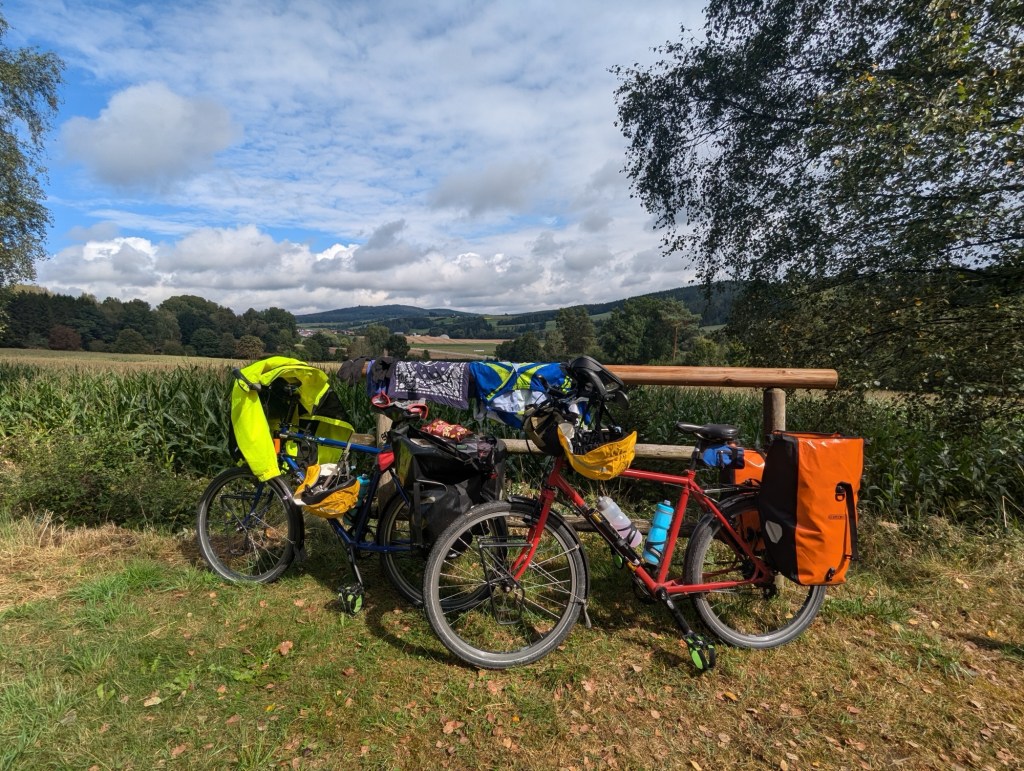
We’ve perused plenty of sites and any number of books for suggestions about what to take on a bike tour. Those recommendations, combined with our experiences and how we prefer to travel, have helped us figured out what works best for us. We no longer do bike camping, so this list only includes the things we take for multi-week, inn-to-inn trips.
Bike Bags
Our trips are generally self-contained, which means we have to carry everything with us from start to finish. We also travel with our own bikes rather than rent them, so we navigate airports and train stations with our gear and transportation. We each use two rear panniers, and on our first bike trip, we bound our pannier sets together with duct tape and a rigged shoulder handle, helmets flopping around on the outside, to use as single carry ons. We had them in one hand while our other hand steered our bikes through crowds to check them at the airline gate (bikes fly free as a piece of luggage on international flights). After the relief of getting rid of the bikes, we each still had to carry these two improvised and awkward piles around until we boarded the plane. Barely doable. That’s why we now each bring along a packable backpack. When we have to get on a plane, train or bus, we pack all of our gear, including the panniers and our helmets, into these packs. It makes it a whole lot easier to carry our gear, and when we don’t need them, the bags fold down to a reasonable size which we stuff in the bottom of a pannier and carry with us on our trip.
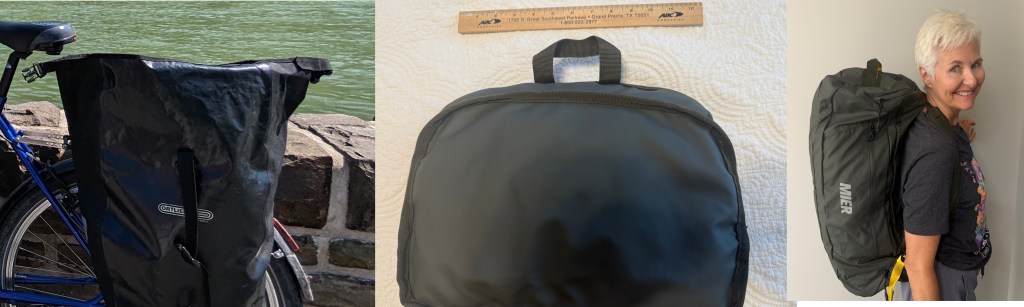
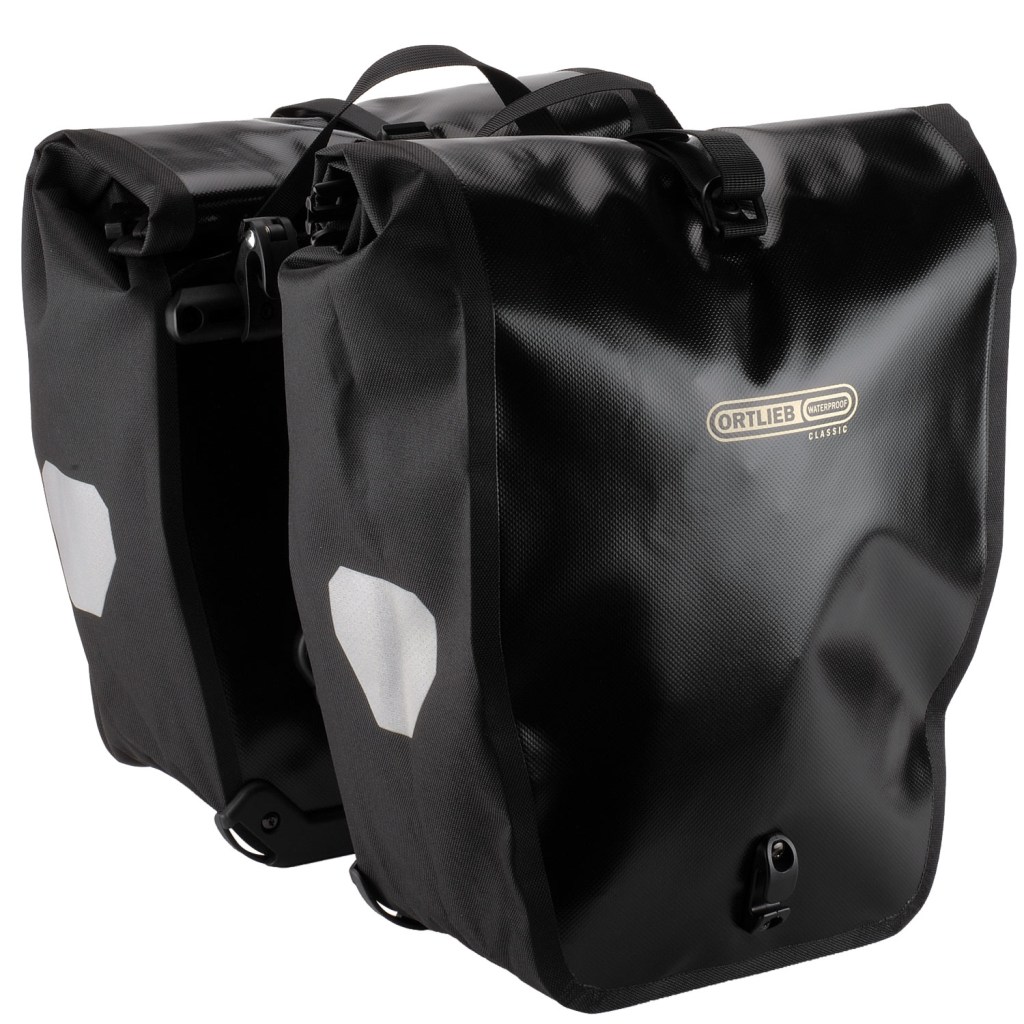
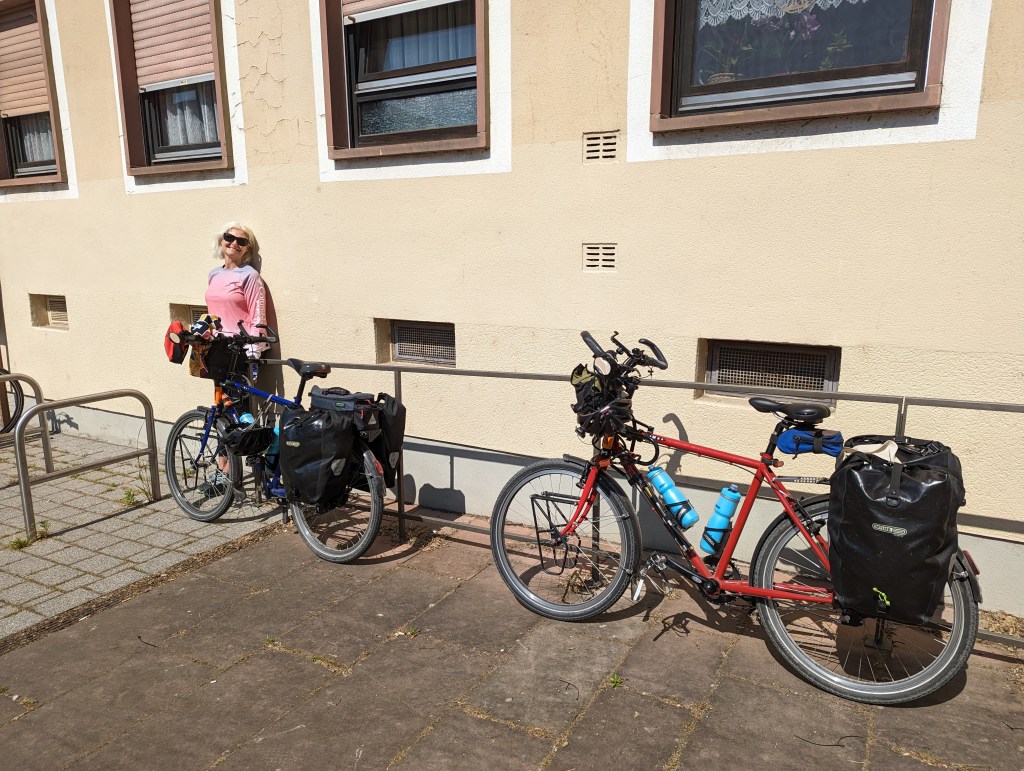
Speaking of panniers, we use two Ortlieb Back Roller Classic bags each. At 40 liters, they are spacious and, with the tops rolled down, they are completely waterproof.
Intercoms
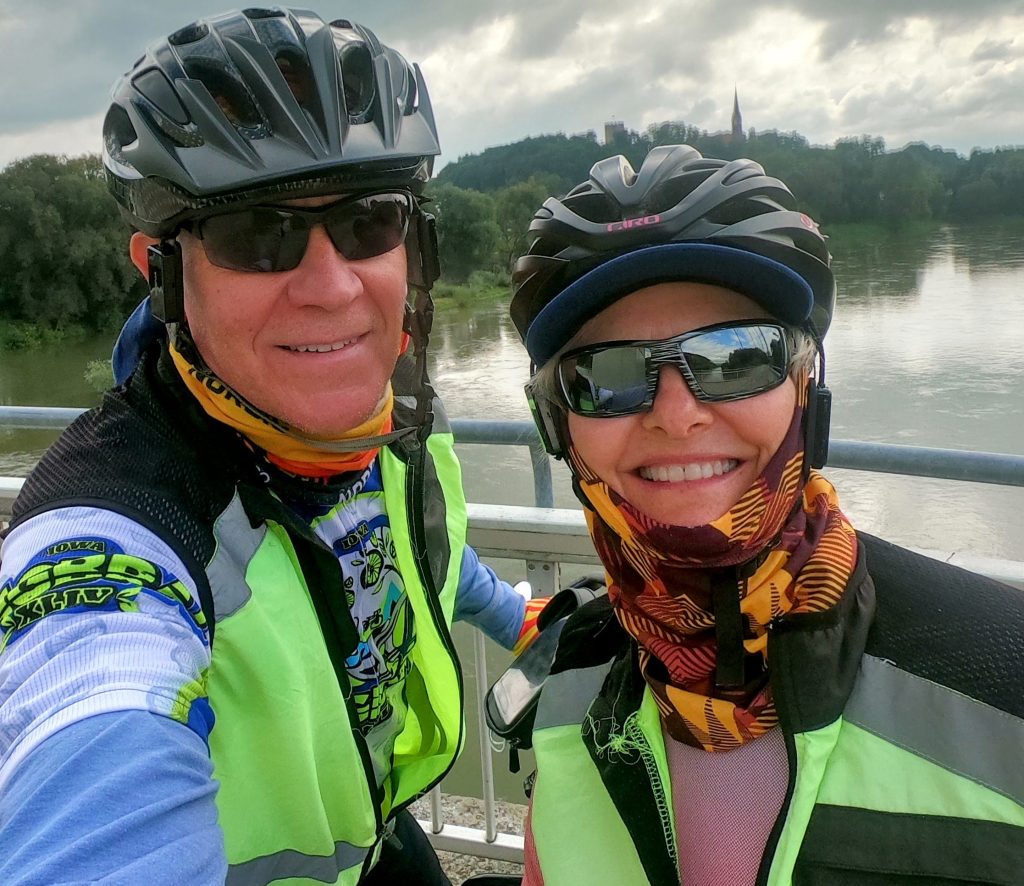
Some cyclists consider an intercom headset to be either a luxury or completely unnecessary. We are not those people. For us they’re an essential piece of safety and communication equipment. We can go through busy city streets and communicate if the one in the back doesn’t make it through a traffic light. The lead cyclist can warn the back cyclist of road hazards they come across first. And when there are long stretches of mundane road, we can chat to relieve boredom. You do hear heavy breathing—and not in a good way—when you are both slogging up a big hill, but the trade off is worth it. We have had a couple of different types over the years, but one feature they all have in common is they sit on top of the ears without covering them. You can hear each other but also still hear important traffic noises.
Rain Gear
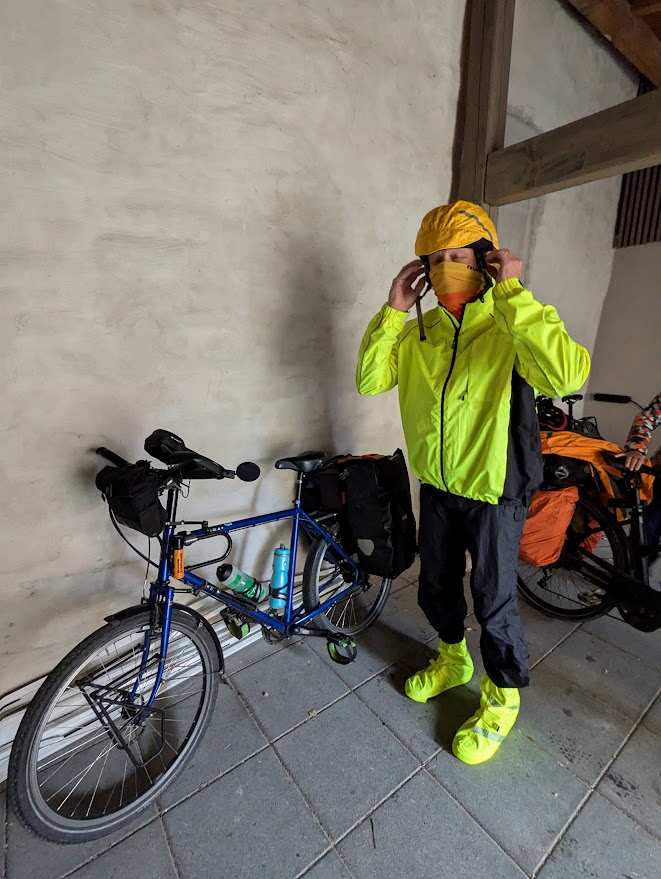
Rain gear is such a mixed bag. In our experience, it really doesn’t matter if you’ve spent money on top-of-the-line rain jackets and pants or not. If it’s rainy with warm temps, waterproof gear holds in sweat so you’re drenched inside your waterproof covering, and if it rains enough, everything you’re wearing is going to get wet anyway. We carry both a rain jacket and rain pants, but we’re more likely to use the pants over our street clothes when we’re walking around town in the rain than while we’re riding. In addition to a jacket and pants, we also wear a helmet cover, shoe covers, and, if it’s chilly, waterproof gloves. But there’s a caveat with these as well. Even though we’ve tried high quality (read expensive) shoe covers and gloves, none of them really work that well over a period of extended riding in the rain.
If we’re riding during a time of year where the weather can get chilly, we’ll also bring along a pair of waterproof socks and acrylic-dipped gloves meant for people working in a freezer. These aren’t made specifically for cycling but they actually work to keep your fingers dry and warm.
Clothes
We bring essentially the same things, whether we are traveling for two weeks or six:
- One pair of pants and shirt for walking around town in the evening
- Two sets of underwear and socks
- One pair of walking shoes
- Two sets of cycling clothes, including bike gloves, neck gaiters, and bandanas
- One pair of cycling shoes
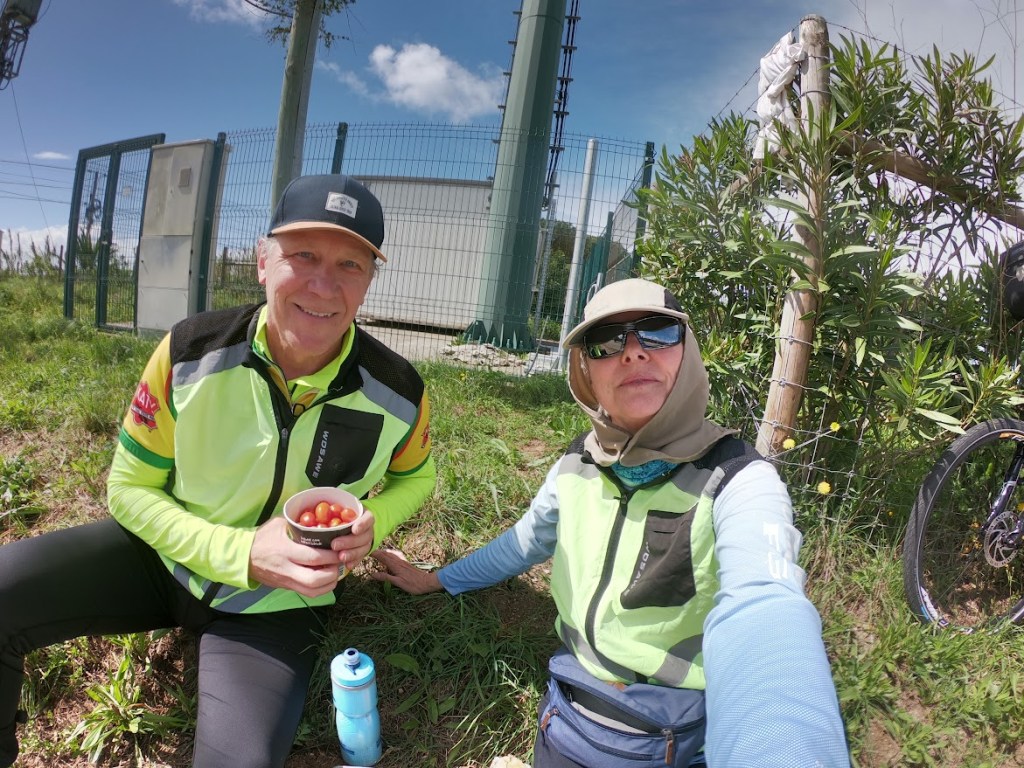
These days we also only wear wicking, long-sleeved UPF-rated shirts and lightweight tights. Rather than having to coat ourselves multiple times a day with sunscreen, we prefer just to stay covered up most of the time.
Tools and Toiletries
This can vary based on how long the trip is or which bikes we’re traveling with. Here are the tools we always bring:
- Air pump
- Extra tubes
- Tire irons
- Allen wrenches
- Appropriate sockets and wrenches
- Chain oil
- Tire gauge
- Small pliers
- Pocket knife (if checking a bike or bag)
- Small amount of duct tape wrapped around a pen
We keep it to the bare minimum when it comes to toiletries, and we try not to duplicate what the other brings. For example, only one of us brings toothpaste, deodorant and other items we both use. We rely on our lodging to have shampoo, soap, towels and the like, so we never bring those kinds of things.
Related to toiletries, we also carry a small first aid kit that includes a few band aids, pain relievers, triple antibiotic ointment, Alka-seltzer, Alka-seltzer plus, and zinc oxide cream (to prevent seat rash).
Final Essentials
No matter where we’re going or for how long, there are some obvious things we can’t be without. This includes:
- Phone
- Power bank and enough cables to charge phones, helmets, smartwatches and AirPods
- Power adapter (for other than U.S. current)
- IDs (including passport if traveling out of the country)
- Credit cards
- Some cash in American dollars
Everyone is different and this list is not meant to be comprehensive. If you’re camping or if you’re on a supported ride, many of these items may not be necessary. We’ve toured multiple times by bike, both in the U.S. and in Europe. Through the years, we have been able to fine tune what we find to be necessary and what we can do without.
 Krause Travels
Leave a comment