
A lot has been written on the best way to transport your bikes on planes. Here are the main ways most people get their bikes to their destination when traveling by air.
- Substantially disassemble and box them.
- Remove pedals, turn handlebars and wrap them in plastic bags.
- Disassemble fully and put them in hard-side cases.
- Pay to have the bike boxed and shipped.
- Rent bikes in the destination city.
Based on our experiences, none of these methods is terrible and none is perfect. The purpose of this post is not to convince you of which way is best, but simply to describe our experiences and the solutions we’ve settled on.
Our first international bike trip was to Ireland in 1986. We scrounged some bike boxes from a local bike shop and dismantled and packed them ourselves. They ended up missing the Dublin to Cork leg of our flight so did not arrive when we did. Fortunately, we were staying in Cork for a couple of days so that didn’t really put us behind, and they arrived unscathed.
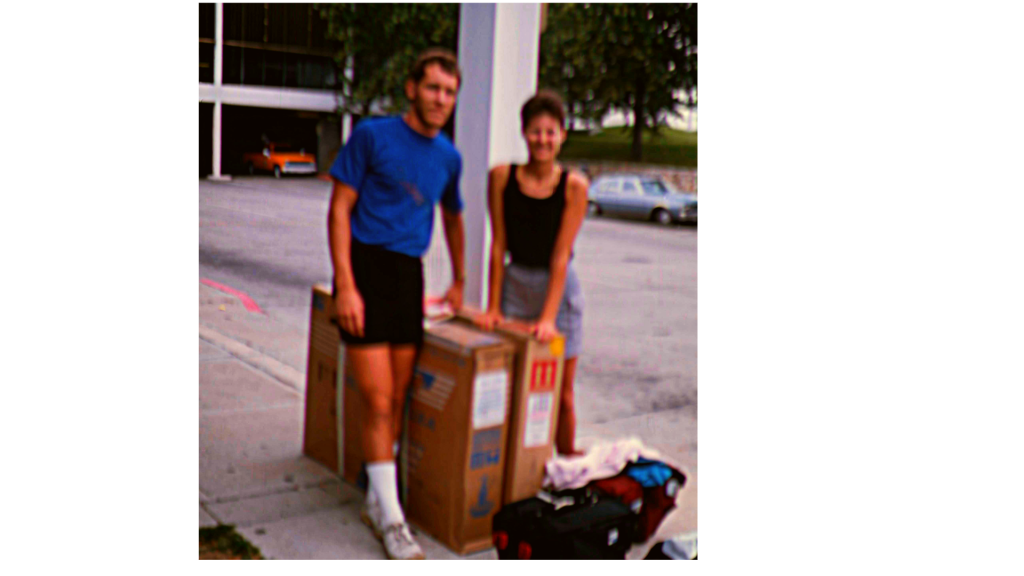
Next time we flew overseas was with two tandems. Each was slightly disassembled and boxed. Because they were oversized, we ended up paying an extra baggage charge. Worse than that, the boxes arrived pretty battered, and a set of pedals had fallen out of one of the boxes en route. That was an interesting ride into town as our seven-year old son, riding on the back of that tandem, had to ride the seven miles with his feet up on the frame. Rather than deal with finding numerous bike boxes for the trip home, we learned the Dublin airport had plastic bike bags available, so we just showed up early and packed them there.
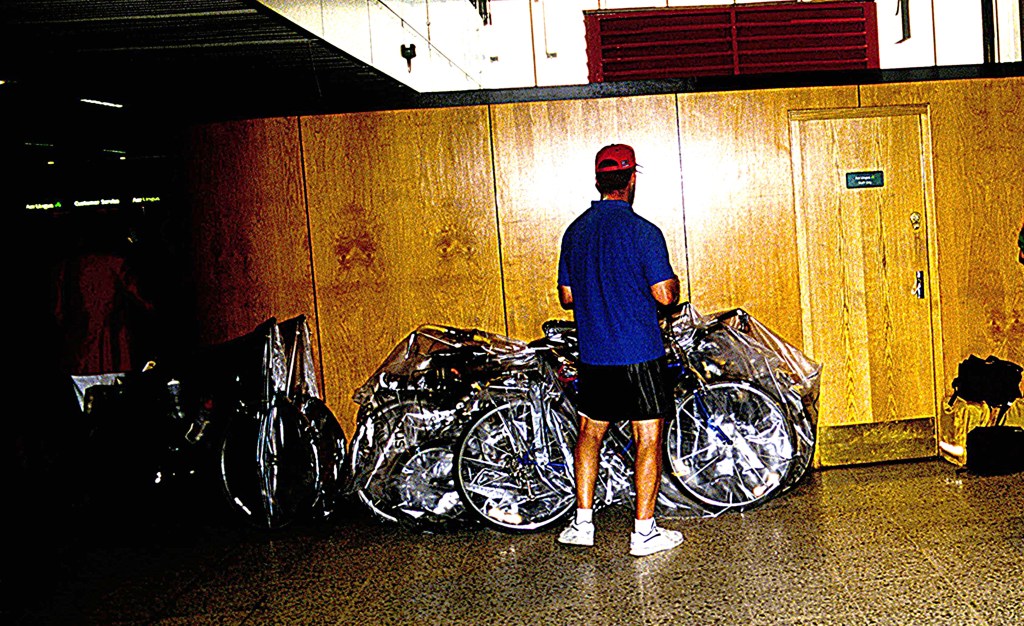
It was several years later when we flew with bikes again, this time with single bikes to Paris. We decided to wrap them in plastic. We bought twin-size mattress covers for the job. Just turn the handlebars, take off the pedals, and voila, the bike is ready to pack. This ended up working out very well and all we had to do was throw away the plastic and head on our way. On that same trip, we were flying back to the U.S. from the Netherlands. Unfortunately, the Schipol Airport in Amsterdam requires bikes to be in boxes (we knew this in advance). The good news is they sell bike boxes at the airport. The bad news is they are 30 euros each (around $70 for two).
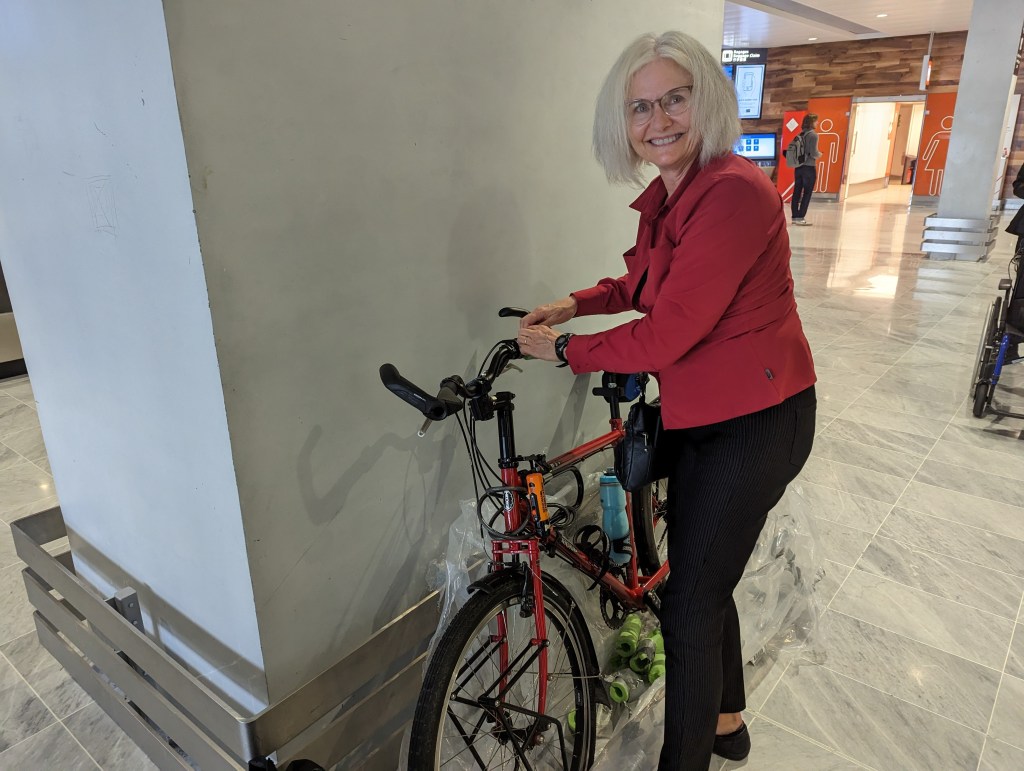
A year later, we were headed to Berlin with our bikes, but we were first making a stop in Edinburgh, Scotland, for a couple of days to go to shows at the Edinburgh Festival Fringe. We bagged the bikes and dutifully took them to the baggage counter. The agent then informed us that bikes had to be boxed and they couldn’t take them in bags (this was the same airline that accepted our bikes in bags the previous year). Bike boxes in Kansas City are not particularly easy to come by and they certainly don’t have them at the airport. Fortunately, we were able to speak with a supervisor who agreed to let them go, as long as we signed a waiver. We gladly signed. Unless bikes are in a hard-sided case, airlines generally won’t cover damage anyway, so we did not feel like we were giving up any rights.
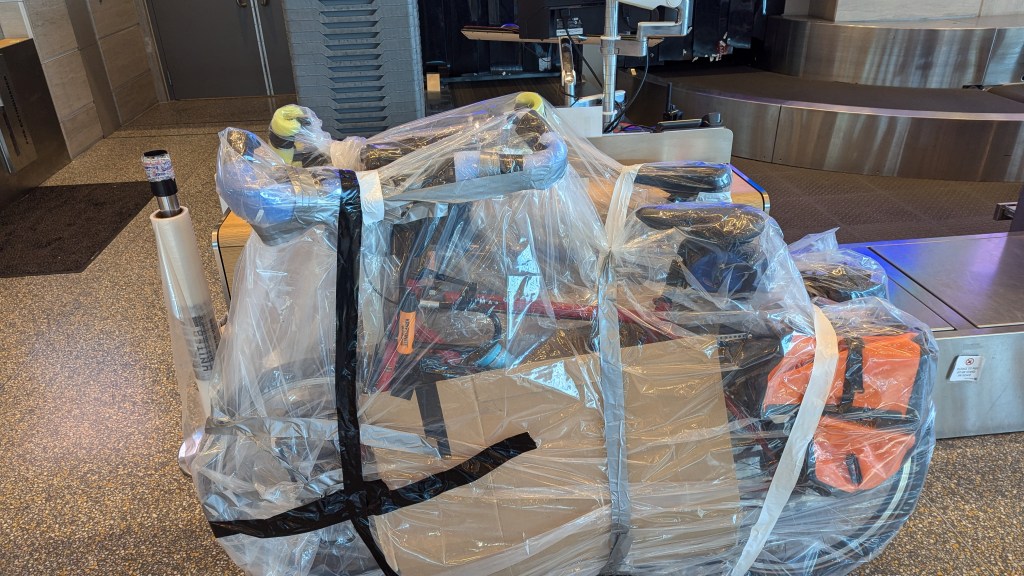
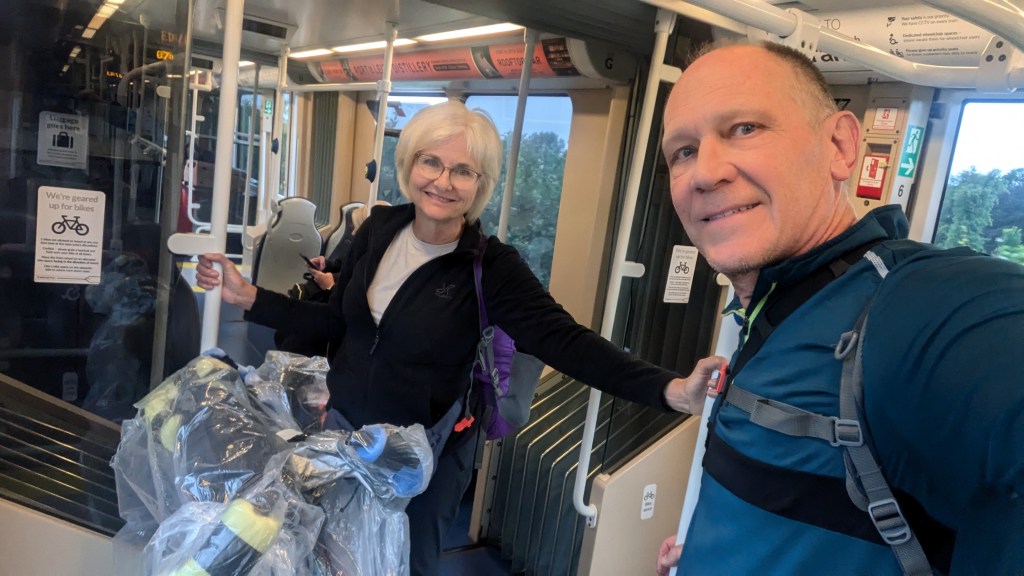
Consider this poor planning on our part. Since we weren’t going to be riding in Edinburgh and didn’t want to unpack our bikes, we had to lug them from the airport to the tram, and then from the tram to the hotel. As we got on the tram with our bikes, the conductor told us that, technically, during the Fringe Festival, bikes weren’t allowed on the trams. But since it was early morning and the tram wasn’t busy, he let us on.
To get back to the Edinburgh Airport we took a cab instead of the tram, but there was still a fairly long distance to carry our bikes. And though we got no hassles about them being in bags, we ended up carrying them to multiple places before we finally found the oversize baggage check-in.
At that point, we decided enough was enough. We began searching for places we could store our bikes in Germany at the end of our trip. We already had tentative plans to come back in several months anyway, and the thought of not having to deal with all of the issues surrounding transporting bikes really appealed to us.
Finding a place to store our bikes long term in Germany wasn’t too difficult. Most larger cities have secure bike storage available, especially near train stations. While all of the locations had covers, most of them still had some exposure to the elements. Because we wanted to leave our pannier bags, helmets, shoes, and a few tools as well, we really wanted something that was completely enclosed. We finally found what we were looking for in Regensburg. Because it’s only about an hour by train from Munich we decided that this would be a reasonable place to store our bikes for nearly a year.

Leaving bikes in Europe isn’t for everyone. Fortunately, we are retired and have plans to travel back to Europe multiple times. We also have other bikes at home that we can ride, so we are able to do without these. Renting bikes may seem like an obvious solution to avoid the transportation issue altogether, but our own bikes are set up the way we like them for long trips, and we could never guarantee that our accessories and bags would fit on a rental. In addition, with rented bikes and equipment, you generally have to make a circular trip and end where you start so you can return everything. When you bring your own, you can do end-to-end linear trips which give you more route options since you can arrive and leave from different places.
Between the hassles of inconsistent airline rules, taking the bikes apart to fit in a box, worrying about possible damage or loss, and the hassles of lugging bicycles around an airport, deciding to leave a set of bikes in Europe was a good choice for us.
 Krause Travels
Leave a comment