In October 2023, we do a five-day, four-night guided backpacking trip through the Paria (Pa-REE-a) River Canyon in southeastern Utah. This is a very remote hike; during the five days we only see people on the first and last days. Unlike many of our other trips, this is a self-contained hike. That means we have to carry everything with us, including tents, sleeping bags, food, water, and the like. We also aren’t bringing a change of clothes, other than warm clothes for sleeping. Although our guide is doing all of the cooking, the group splits up the food and cooking equipment so that we all carry our fair share.
In addition to what we carry in, we also have to carry out. The Paria River Canyon is a National Wilderness Area, which means that you have to pack out absolutely everything. There’s nothing as fancy as digging a hole in the ground to bury waste. We have to use what is known as a “wag bag.” Without getting into too much detail, you poop in the bag, throw in the used toilet paper, roll it up, and duct tape it closed. Then you carry it out with you.
There is no GPS or phone signal most of the time so we don’t have a recording of how many miles we hike each day. But, it ranges between six and nine miles. And while the path is mostly flat, there are many times we hike in the river, with a muddy bottom, for long distances.
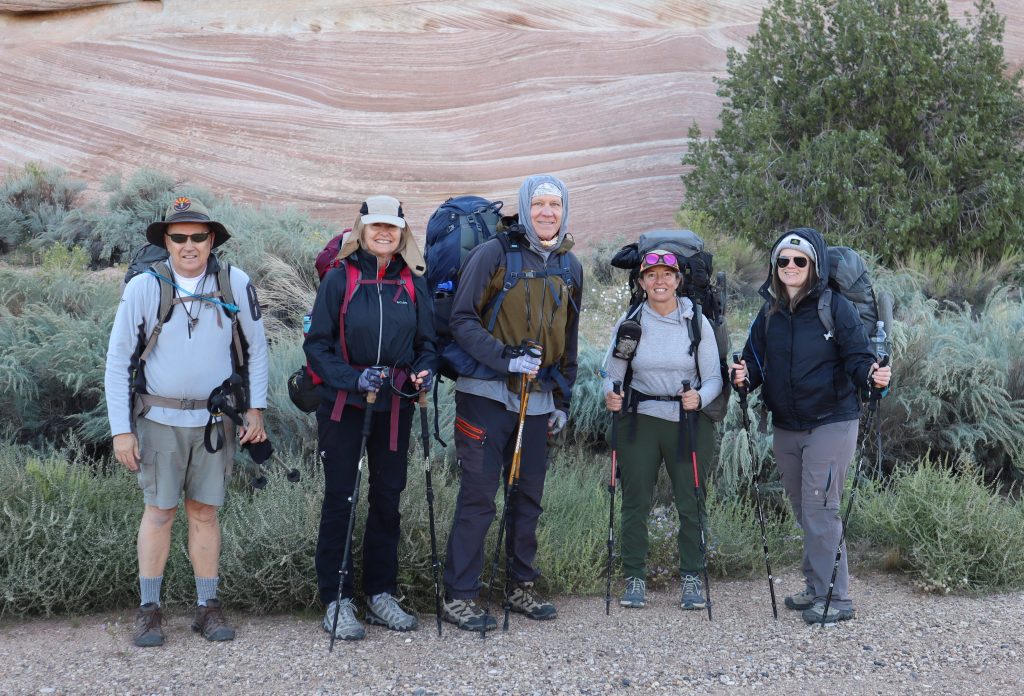
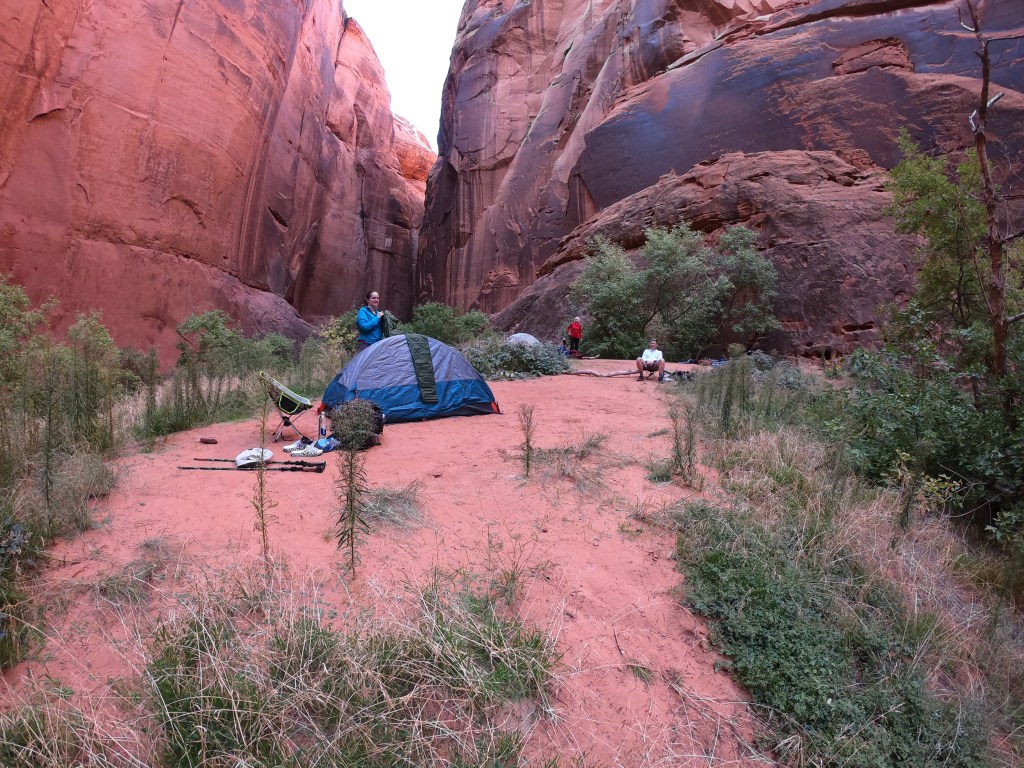
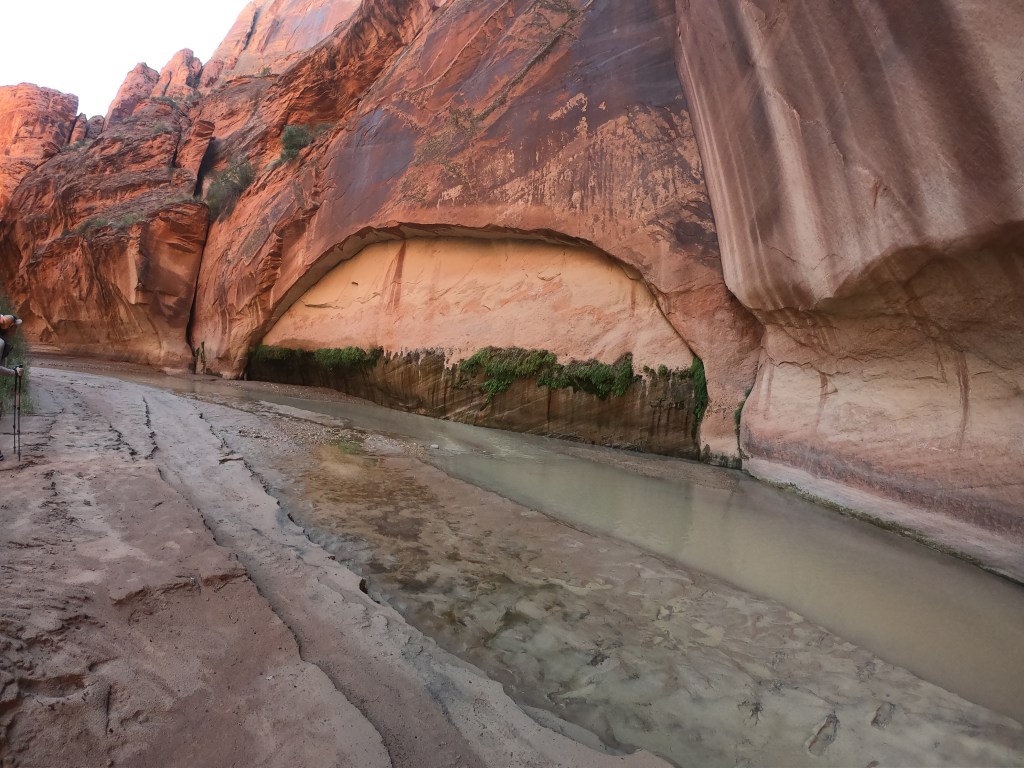
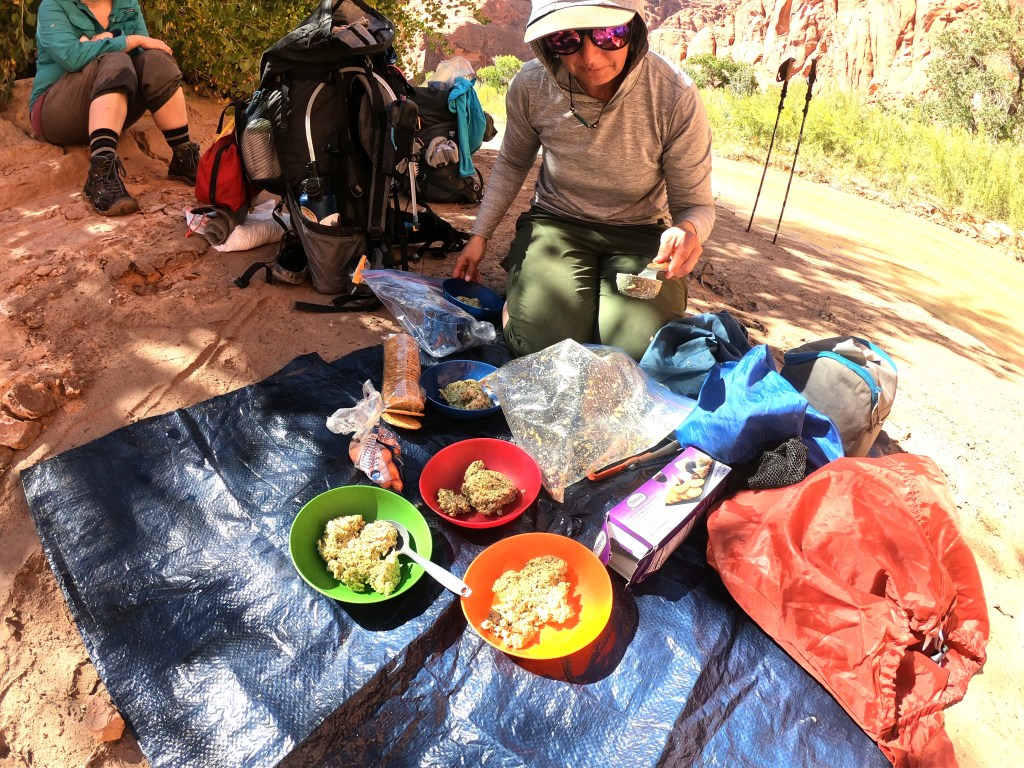
The group getting ready to start on a chilly October morning. Our guide, second from right, is smallest but also carrying the biggest pack. Although we divide up extra food and cooking equipment, she still has lots more to carry than the rest of us.For the first few miles as we enter deeper into the wilderness area, the canyons areopen. Eventually, they get much narrower.Our camp setup for the first night.Our guide does all of the cooking. Morning and evening meals are always cooked; no trail mix for supper.Even in the desert, water weeping out of the cliff creates pockets of green.
Parts of every day involve hiking through the muddy-bottomed Paria River. It is usually less than knee deep.Evenings along the river in October can be pretty chilly. Besides a sleeping bag rated to 25 degrees, we also have a stocking cap, long-sleeved sleep shirt, dry socks and tights to help keep warm.The distance and pace of each day’s hike allow plenty of time for lunch breaks.
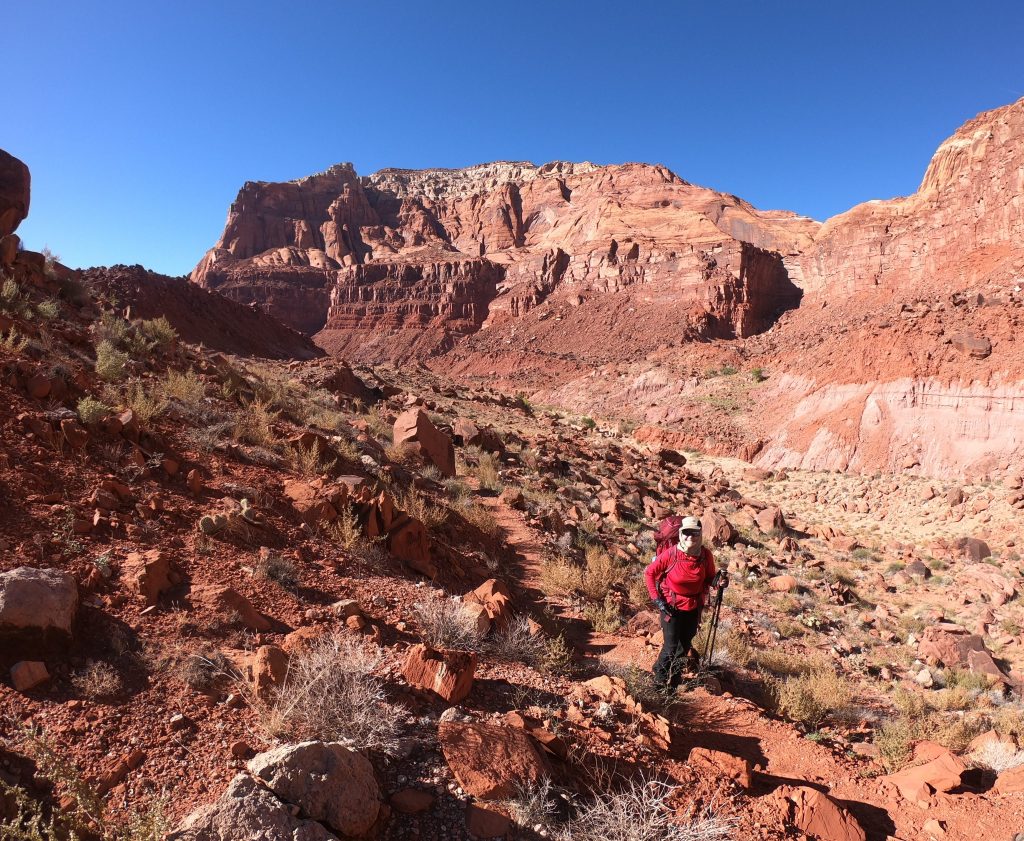
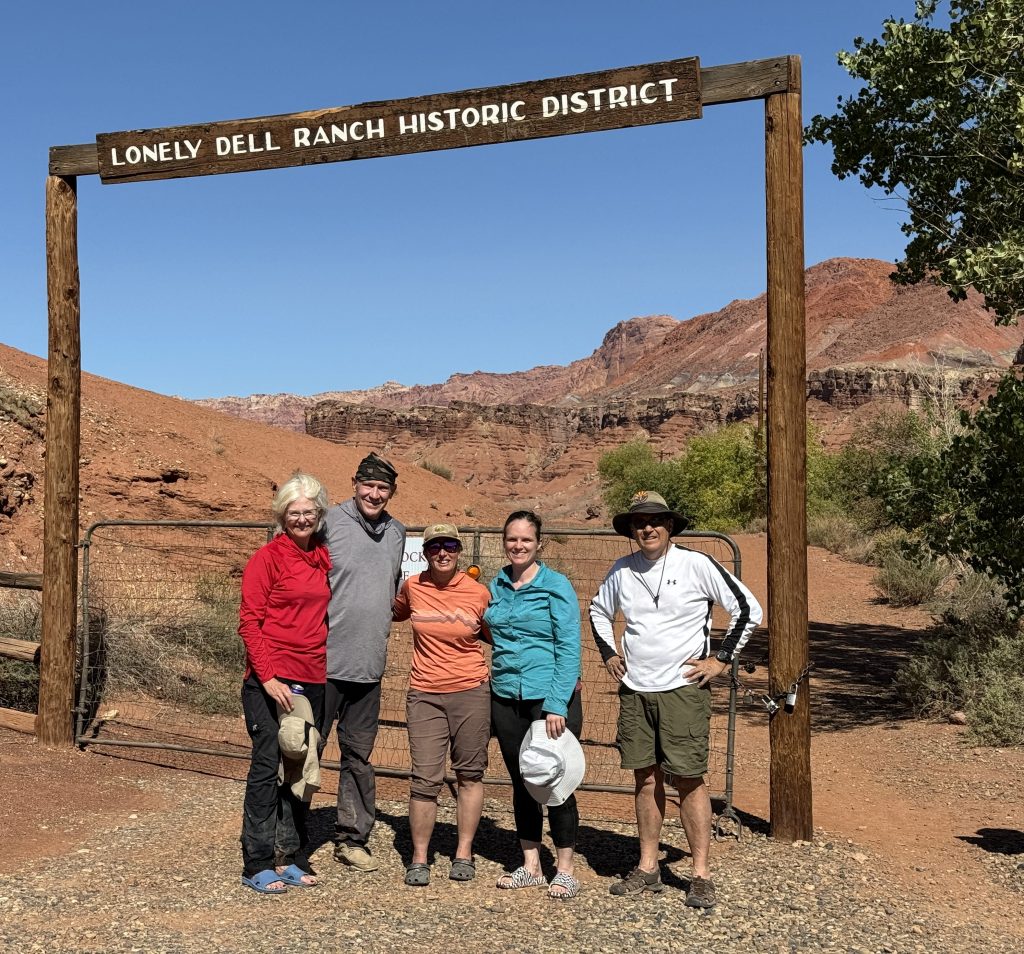
Because our guide is always in front, she finds the areas of quick mud first. This one is particularly deep and hard to get out of.We see numerous examples of petroglyphs carved into the rocks. Some of them may be as old as the 12th century.Towards the end of the hike, the canyons begin to widen out again and we have much more exposed, rockier hiking.Our group survives. Since day one, this is the first time we have seen other people. More importantly, this is where we can dump our wag bags.





 Krause Travels
Leave a comment